Comparative Project for LAW_V 406D

AI-Enabled Victimisation in Singapore and Canada

An interactive comparative brief on deepfakes, scams, and more.

Audience: This website is designed primarily for law students, researchers, and legal practitioners interested in how Singapore and Canada respond to AI-enabled victimisation.

Project Scope

A focus on AI-enabled victimisation

This website compares how Singapore and Canada respond when artificial intelligence is used to victimise individuals, especially through sexual deepfakes, intimate-image abuse, and AI-assisted impersonation scams.

The key comparison is not whether either jurisdiction has law. Both do. The more important question is what each system adds when ordinary criminal law is not enough: Canada tends to rely more heavily on existing criminal-law categories, while Singapore supplements these with more explicit online-harms and victim-relief measures.

The significance of the topic is highlighted through reports and surveys globally. One poll published in South Korea in March 2026 indicated that “More than 80 percent of Korea's teenagers and adults expressed concerns over online abuse involving the misuse of generative artificial intelligence (AI) tools” (Korea Times poll). Meanwhile, a report submitted pursuant to a UN General Assembly resolution (77/193) showed that technology-facilitated violence against women and girls has been intensifying, with studies showing 16 to 58 per cent of women worldwide impacted (UN Women report).

Main Thesis

Both jurisdictions have law. The real difference lies in the response architecture around that law.

Canada relies more heavily on technology-neutral criminal-law reasoning through existing offences. Singapore also uses penal law, but supplements it with a more explicit online-harms and victim-relief structure.

Singapore

Intervention and disruption

Stronger on containing harm once harmful content or conduct is already circulating.

Canada

Continuity

Stronger on offence continuity and doctrinal adaptation.

Deepfake image-based harm

Image-based harms

AI can generate or alter realistic sexual or compromising images, amplifying humiliation and reputational harm.

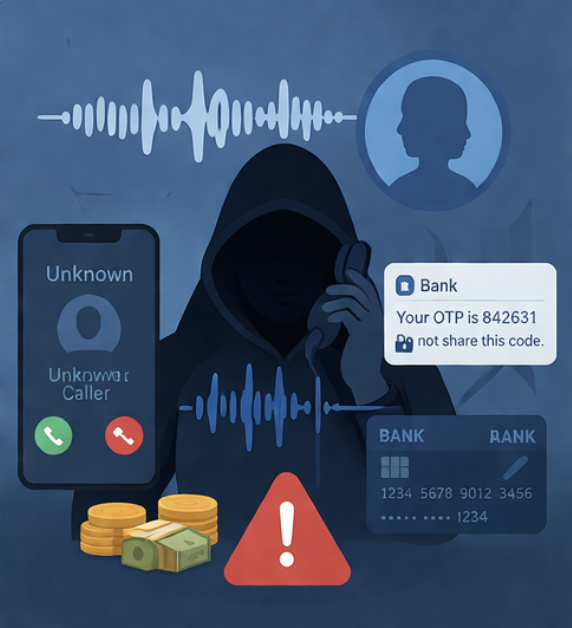
Voice cloning impersonation scam

Impersonation scams

AI also intensifies fraud by making deception cheaper, faster, and more convincing through synthetic identities and voices.

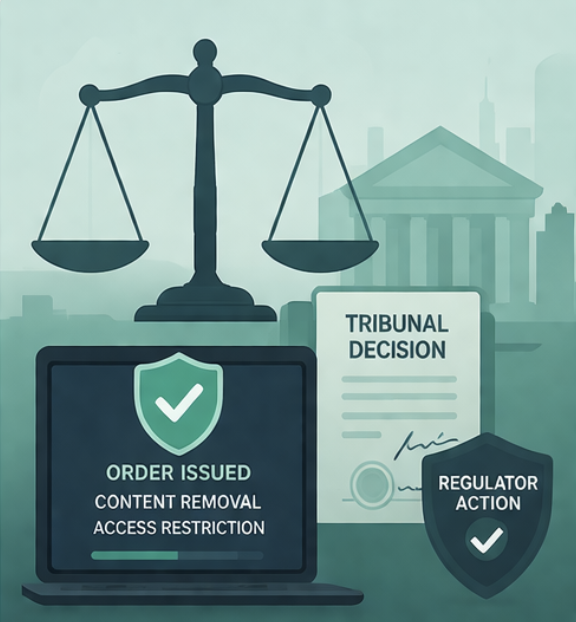
Legal response to online harm

Legal response

The real contrast lies in whether law only punishes after the fact, or can also interrupt harm while it is spreading.

How to use the site

This website is organised by issue area. Each section asks three questions: what harm is involved, whether existing offences already capture it, and what remedies or accountability mechanisms exist once harm begins to spread.

01

Identify the harm

Deepfake abuse, intimate-image manipulation, or AI-assisted impersonation.

02

Check offence coverage

Fraud, personation, intimate-image offences, or child sexual abuse material law.

03

Assess the remedial structure

Takedown, disruption, evidentiary control, oversight, and victim relief.

Issue Area One

Deepfakes and intimate-image abuse

Deepfakes and intimate-image abuse provide the clearest test of whether existing law can respond to realistic but wholly synthetic sexual representations. This is also the issue area where victim relief and takedown mechanisms matter most.

Lens:
Singapore

Penal footholds plus broader intervention

Offence coverage: Singapore has clearer statutory footholds for intimate-image abuse and manipulated sexual content than a purely general harassment model.
Remedies: Singapore’s stronger point is timely relief: takedown, account-related intervention, and rapid containment of ongoing harm. This is done not just through the criminal justice system which, due to court processes, may not be sufficiently timely. The Online Safety (Relief and Accountability) Act 2025 is significant here. Singapore’s model distinguishes between more serious and less serious categories of harm. In cases involving the most severe forms of online harm — such as intimate image abuse or serious victimisation — victims are able to seek assistance directly from the Online Safety Commission (OSC) without first engaging the platform. By contrast, for less serious forms of harm, the framework generally expects victims to report the content to the relevant platform in the first instance. If the platform fails to respond, or responds inadequately, within a prescribed period (commonly framed in implementation materials as approximately 24 hours), the victim may then escalate the matter to the OSC. The OSC is vested with significant enforcement powers. It may issue binding directions to a range of actors, including online platforms, administrators of online groups or pages, content communicators, internet service providers, and app stores. These directions may require, among other things, the removal of harmful content, suspension of offending accounts, disabling of access to content, or enabling the victim to publish a response. Non-compliance with such directions constitutes a criminal offence. An individual who fails to comply may be liable to a fine of up to SGD 20,000, imprisonment for up to 12 months, or both, with additional fines for continuing non-compliance. Entities may face fines of up to SGD 500,000, together with continuing daily penalties. Similar, and in some cases more severe, penalties apply for failure to comply with formal OSC orders. Thus, Singapore’s system does not merely criminalise harmful conduct. It embeds a structured escalation pathway, beginning with platform responsibility and culminating in state intervention through the OSC, with legally enforceable powers to compel compliance.

Even under the Protection from Harassment Act, victims of image-based abuse, including cases involving synthetic or manipulated content, may apply for remedies such as Stop Publication Orders, Correction Orders, and monetary compensation. The Protection from Harassment Court provides expedited procedures, with relief in some cases granted within approximately 48 hours.
Possession of or gaining access to voyeuristic or intimate image or recording 377BD.—(1) Any person shall be guilty of an offence who has in his possession or has gained access to an image or recording of another person and — (a) knows or has reason to believe that the image or recording was obtained through the commission of an offence under section 377BB; or (b) knows or has reason to believe that — (i) the image or recording is an intimate image or recording as defined in section 377BE(5); (ii) the possession of or access to the image or recording was without the consent of the person depicted; and (iii) the possession of or access will or is likely to cause humiliation, alarm or distress. [...] 377BE.—(1) Any person (A) shall be guilty of an offence who — (a) intentionally or knowingly distributes an intimate image or recording of another person (B); (b) without B’s consent; and (c) knows or has reason to believe that the distribution will or is likely to cause humiliation, alarm or distress. (5) “intimate image or recording” includes an image that has been altered to appear to show such acts, but excludes one that no reasonable person would believe depicts B.
Analysis of 377BE and 377BE: The definition of “intimate image or recording” includes an "image that has been altered to appear to show such acts". This legislatively tries to catch imagery generated with technologies, and thus reflects the Singapore approach of making statutory amendments to keep up with technology. However, I note that as this was a 2019 amendment, it may have failed to consider the manner in which AI deepfakes are generated. While one way deepfakes may be generated might involve a real image of a person followed by a prompt for the AI tool to alter the image into a violating one, it is possible that a user today does not ask for the AI to alter an existing image and instead seek for the AI to generate a completely new image. This definition may thus not be comprehensive enough, though it is possible that the courts may interpret 'alter' broadly, noting that the purpose of the provision was to have digitally created non-consensual imagery caught.

What is noteworthy is also that 377BD, which is on mere possession—not distribution—there is already liability. Thus, possession of AI-altered images of someone to depict them in compromising positions would already attract criminal liability, even if one does not distribute these images.
Intentionally causing harassment, alarm or distress 3.—(1) An individual or entity must not, with intent to cause harassment, alarm or distress to another person (called in this section the target person), by any means — (a) use any threatening, abusive or insulting words or behaviour; (b) make any threatening, abusive or insulting communication; or (c) publish any identity information of the target person or a related person of the target person, and as a result causing the target person or any other person (each called in this section the victim) harassment, alarm or distress. (2) Any individual or entity that contravenes subsection (1) shall be guilty of an offence and, subject to section 8, shall be liable on conviction to a fine not exceeding $5,000 or to imprisonment for a term not exceeding 6 months or to both.
Analysis of POHA: The sections under POHA are broadly worded, such that most AI-driven abuses involving deepfakes to harass, alarm, or distress would be caught under the Act.
Intimate image abuse 13.—(1) In this Act, “intimate image abuse” means the communication of online material — (a) that contains, without a person’s (called in this section the victim) consent — (i) an intimate image or recording of the victim; (ii) an offer to sell or distribute an intimate image or recording of the victim; or (iii) an advertisement of an intimate image or recording of the victim; and (b) that a reasonable person would conclude is likely to cause the victim harassment, alarm, distress or humiliation. (2) In this section — “distribute” includes any of the following conduct, whether done in person, electronically, digitally or in any other way: (a) to send, publish, supply, show, exhibit, transmit or communicate to another person; (b) to make available for viewing or access by another person; “intimate image or recording”, in relation to a person — (a) means an image or a recording (including an image or a recording that has been altered or generated by any means) — (i) of the person’s genital or anal region, whether bare or covered by underwear; (ii) of the person’s breasts if the person is a female, whether bare or covered by underwear; or (iii) of the person doing a private act; but (b) excludes an image or a recording that no reasonable person would believe depicts that person. [...] Inauthentic material abuse 16.—(1) In this Act, “inauthentic material abuse” means the communication of inauthentic material of a person (called in this section the victim) that a reasonable person would conclude is likely to cause the victim harassment, alarm, distress or humiliation because it is false or misleading. (2) In this section, “inauthentic material”, in relation to a victim, means any audio, visual or audiovisual material — (a) that has been altered or generated using digital means; (b) that is a false or misleading depiction, whether express or implied, of the victim’s words, actions or conduct, even though the victim may not appear in the material; and (c) that is realistic enough such that a reasonable person would believe that the victim said such words or engaged in such actions or conduct.
Analysis of OSRA: The sections under the OSRA clearly define, and include clear illustrations of, various "online harmful activities". This adds on explicit clarity beyond what existing penal offences or offences under POHA state. This may provide more deterrence value, as the general public becomes aware that there are laws specifically dealing with these new AI-driven threats, removing much guess-work for victims (who may be unsure whether offences are caught under the more general Penal Offences). Furthermore, the main benefit of this is its reporting mechanism.

Source: Channel NewsAsia report on IMDA letters of caution to X and TikTok

SINGAPORE: The Infocomm Media Development Authority (IMDA) has issued letters of caution to X and TikTok and placed both platforms under enhanced supervision, following “serious weaknesses” in their measures to detect and remove harmful online content. IMDA’s Online Safety Assessment Report 2025, released on Tuesday (Mar 31), found that X failed to effectively tackle child sexual exploitation and abuse material (CSEM), while TikTok showed serious gaps in detecting and removing terrorism-related content. According to IMDA, a letter of caution reprimands regulated entities on serious weaknesses discovered by the regulator and requires them to take steps to address these weaknesses. Under the enhanced supervision measures, the two platforms must provide regular progress updates to IMDA in implementing rectification measures, until the regulator is satisfied that the issues are adequately resolved. The measures include enhancing their detection systems with the use of AI, and taking into account specific code-words and tactics that bad actors have used to target Singapore users. The two platforms have also agreed to train human reviewers to better identify CSEM and terrorism content related to Singapore, and improve information sharing with the tech community and regulators, said IMDA. They must also submit supporting data and information to IMDA by Jun 30 to demonstrate the effectiveness of their rectification measures. "Should X or TikTok fail to satisfy IMDA that they have improved the effectiveness of their measures to address the specific types of CSEM and terrorism content that IMDA has detected, IMDA will not hesitate to explore further options, including potential regulatory action under the Broadcasting Act," said the authority. Under Singapore’s Broadcasting Act, those who fail to comply may face a fine of up to S$1 million, with further fines for continuing offences. Both platforms have accepted IMDA’s findings and have committed to rectifying the issues, said IMDA.

Singapore does not rely only on later punishment. Its broader architecture is aimed at stopping and reducing harm while it is occurring.

Even in a stronger interventionist framework, wholly synthetic deepfakes may still raise interpretive questions. Furthermore, it may raise freedom/rights concerns.

Canada

Strong doctrine, but a need for legislative updating

Offence coverage: Canada is strong where AI-generated harm can be absorbed into child sexual abuse material law and existing criminal doctrine.
Remedies: Canada is less oriented toward rapid victim relief and more toward ordinary criminal and evidentiary process.

In Canada, there is no single legal mechanism that allows individuals to directly compel the removal of non-consensual intimate images. Instead, victims must rely on a fragmented set of avenues, including criminal provisions such as section 162.1 of the Criminal Code, privacy complaints under the Personal Information Protection and Electronic Documents Act (PIPEDA), or civil actions such as the tort of intrusion upon seclusion. These pathways are often slow, inconsistent, and costly to pursue.

However, it is noted that some provinces have started to amend legislation. Just last week, Alberta's government announced that it is considering amendments to an existing law to enable people sue others for sharing fake intimate images that are created through artificial intelligence. This would also allow for damages and the seeking of injunctions to stop further distribution. A concern remains, though, that this may not be sufficiently efficient. CBC report on proposed Alberta deepfake legislation
British Columbia also has the BC Intimate Images Protection Act, which also allows for application for an expedited protection order.
While specific parts of Canada have moved to create such expedited processes, this is not generalisable to the whole of Canada.
It is also noteworthy that the BC Intimate Images Protection Act still requires a court or tribunal process when one applies for such an expedited protection order, while the Singapore approach appears mainly regulatory with key decision-makers possibly able to act faster.
Voyeurism 162 (1) Every one commits an offence who, surreptitiously, observes — including by mechanical or electronic means — or makes a visual recording of a person who is in circumstances that give rise to a reasonable expectation of privacy, if (a) the person is in a place in which a person can reasonably be expected to be nude, to expose his or her genital organs or anal region or her breasts, or to be engaged in explicit sexual activity; (b) the person is nude, is exposing his or her genital organs or anal region or her breasts, or is engaged in explicit sexual activity, and the observation or recording is done for the purpose of observing or recording a person in such a state or engaged in such an activity; or (c) the observation or recording is done for a sexual purpose. Definition of child sexual abuse and exploitation material 163.1 (1) In this section, child sexual abuse and exploitation material means (a) a photographic, film, video or other visual representation, whether or not it was made by electronic or mechanical means, (i) that shows a person who is or is depicted as being under the age of eighteen years and is engaged in or is depicted as engaged in explicit sexual activity, or (ii) the dominant characteristic of which is the depiction, for a sexual purpose, of a sexual organ or the anal region of a person under the age of eighteen years; (b) any written material, visual representation or audio recording that advocates or counsels sexual activity with a person under the age of eighteen years that would be an offence under this Act; (c) any written material whose dominant characteristic is the description, for a sexual purpose, of sexual activity with a person under the age of eighteen years that would be an offence under this Act; or (d) any audio recording that has as its dominant characteristic the description, presentation or representation, for a sexual purpose, of sexual activity with a person under the age of eighteen years that would be an offence under this Act.
Analysis of Criminal Code s 162.1 and s 163.1: The phrase “visual recording” in s 162.1 fits conventional intimate-image abuse better than wholly fabricated sexual depictions. Thus, while attempts may be maded to have AI-driven abuse caught under existing provisions, there is a limit to how much the statutory wording can be stretched, and legislative intervention may still be needed. This is where Bill C-16 would potentially come in. The proposed amendment would expand the definition of “intimate image” to include a visual representation showing an identifiable person depicted as nude or engaged in explicit sexual activity where the depiction is likely to be mistaken for a visual recording of that person. This identifies the current Canadian gap and the legislative move to close it.

R v Larouche, 2023 QCCQ 1853, a key Canadian case dealing with the offence of making child pornography using deepfakes, had the court describe deepfake technology as using deep-learning algorithms to create extremely realistic fakes, including face-swaps and synthetic voices, and noted that the offender had produced such content. The significance of Larouche is that it shows Canadian courts can treat AI-generated sexual exploitation of children as falling within existing child-pornography offences rather than as conduct outside the criminal law merely because the imagery is synthetic. That point is reinforced by the Supreme Court of Canada’s discussion in Quebec (Attorney General) v Senneville, 2025 SCC 33. The Court stated that child pornography is particularly harmful “whether or not it depicts real children,” and that such material “can now be generated on a very large scale using artificial intelligence,” and cited Larouche as an example. This is doctrinally important because it shows the Supreme Court expressly recognising AI-generated child sexual abuse material as a live and serious criminal-law problem, not an imagined future issue.

The Act defines an “intimate image” broadly, including an image that has been “altered in any way”, and confirms that a person may still have a reasonable expectation of privacy in an altered image. It also allows a victim to apply for an expedited protection order requiring: • deletion or destruction of copies • removal from platforms • de-indexing from search engines Applications may be made without notice. The Act also provides for damages and administrative penalties for non-compliance.

Analysis: British Columbia now has a serious victim-relief regime for deepfake and intimate-image harms. This means the Canada–Singapore gap is much narrower than it first appears in this specific area.

Row-by-row comparison matrix

Use this to compare the same issue across both jurisdictions more directly.

Issue
Singapore
Canada
Main statutory hook
Penal Code ss 377BD, 377BE, Protection from Harassment Act 2014, Online Safety (Relief and Accountability) Act 2025
Criminal Code ss 162.1, 163.1
Main strength
Faster intervention and relief
Doctrinal continuity
Main weakness
Interventionism may raise fairness concerns
Gaps in existing wording

Issue Area Two

AI-assisted impersonation scams

In the scams context, the offence gap is smaller. Both jurisdictions already criminalise deception and personation. The main difference lies less in offence definition than in enforcement structure, speed of intervention, and remedial architecture.

Singapore

Existing offences with added legislation

Singapore’s offence structure captures scams comfortably. For scams, the Penal Code 1871 includes s 415 on cheating, s 416 on cheating by personation, and s 416B on cheating by remote communication. These provisions are broad enough to capture AI-assisted impersonation fraud, including scams using voice cloning, because the legal wrong remains deception causing harmful inducement.

415 — Whoever, by deceiving any person, whether or not such deception was the sole or main inducement, fraudulently or dishonestly induces the person so deceived to deliver any property to any person, or to consent that any person shall retain any property, or intentionally induces the person so deceived to do or omit to do anything which the person would not do or omit if not so deceived, and which act or omission causes or is likely to cause damage or harm, commits “cheating”.

This is the core Singapore scam offence. It is broad enough to capture AI-assisted deception, including voice-cloning or other synthetic impersonation, because the legal wrong remains deceit causing harmful inducement.

416 — A person is said to “cheat by personation”, if he cheats by pretending to be some other person, or by knowingly substituting one person for another, or representing that he or any other person is a person other than he or such other person really is.

This provision is especially important for AI-enabled impersonation scams. A cloned voice, fake avatar, or synthetic identity can still fit within cheating by personation if it is used to deceive the victim into acting on a false belief about who is communicating with them.

Online Criminal Harms Act 2023 — “An Act to counter online criminal activity and protect against online harms, and for connected purposes.” The Act includes definitions for directions such as: • “stop communication direction” • “account restriction direction” • “access blocking direction” • “app removal direction” Failure to comply with certain directions may attract penalties of up to: • SGD 20,000 fine or imprisonment up to 12 months for an individual, or both • SGD 500,000 fine for an entity • additional fines for continuing non-compliance

OCHA is not the underlying scam offence itself. Its significance is remedial: it gives Singapore a disruption-oriented framework to interfere with online criminal activity quickly, rather than waiting only for ordinary prosecution.

Case Law - Quoine Pte Ltd v B2C2 Ltd [2020] SGCA(I) 02 The B2C2 case does not provide a definitive ruling on non-deterministic AI scams, as the software in that case was deterministic—meaning it followed pre-programmed logic without the capacity to develop its own responses. However, the judgment and subsequent legal commentary offer several frameworks for how courts might approach transactions conducted by more autonomous, non-deterministic algorithms used for scam or opportunistic purposes.

In the B2C2 case, the majority adopted a test of imputing the programmer’s knowledge to the transaction. If a human uses an AI to conduct a scam, the court would likely look at the state of mind of the programmer or the person running the algorithm from the point of programming up to the point of contract formation.
Canada

Fraud remains fraud

Canada’s existing fraud and identity offences do much of the work. The Criminal Code already contains broad fraud and identity-related offences. Section 380(1) criminalises fraud by “deceit, falsehood or other fraudulent means”; s 403(1) criminalises fraudulently personating another person; and s 402.2(1) criminalises obtaining or possessing identity information with intent to use it to commit indictable offences involving fraud, deceit, or falsehood. Those provisions are flexible enough to capture voice-cloning scams and similar AI-enabled impersonation schemes, because the gravamen of the wrong remains dishonest deception and misuse of another’s identity. The technology changes the persuasiveness of the deception, but not the basic legal structure of the offence.

380 (1) Every one who, by deceit, falsehood or other fraudulent means, whether or not it is a false pretence within the meaning of this Act, defrauds the public or any person, whether ascertained or not, of any property, money or valuable security or any service, (a) is guilty of an indictable offence and liable to a term of imprisonment not exceeding fourteen years, where the subject-matter of the offence is a testamentary instrument or the value of the subject-matter of the offence exceeds five thousand dollars; or (b) is guilty (i) of an indictable offence and is liable to imprisonment for a term not exceeding two years, or (ii) of an offence punishable on summary conviction, where the value of the subject-matter of the offence does not exceed five thousand dollars.

This is the central Canadian offence for AI-assisted scams. A voice-cloning scam remains fraud because the essence of the wrong is still deceit and loss, even if the deception is technologically enhanced.

402.2 (1) Every person commits an offence who obtains or possesses another person’s identity information with intent to use it to commit an indictable offence that includes fraud, deceit or falsehood as an element of the offence. (2) Everyone commits an offence who transmits, makes available, distributes, sells or offers for sale another person’s identity information, or has it in their possession for any of those purposes, knowing that or being reckless as to whether the information will be used to commit an indictable offence that includes fraud, deceit or falsehood as an element of the offence. (3) For the purposes of subsections (1) and (2), an indictable offence referred to in either of those subsections includes: … (i) section 380 (fraud); and (j) section 403 (identity fraud).

This provision is useful where AI-assisted scams involve obtaining, holding, or trafficking in identity information for fraud or personation-based offences.

Sentencing Implications? At least one Canadian case highlights the role of artificial intelligence in scams, in the context of deterrence and denunciation, as follows:
SENTENCING: ITS PURPOSE, GUIDING PRINCIPLES AND OBJECTIVES 13 Any sentencing decision must be understood within the context of the purpose of sentencing, which is set out in detail in the Criminal Code. The fundamental purpose of sentencing as set out in s. 718 is to protect the public and to contribute to respect for the law and the maintenance of a just, peaceful and safe society. This is accomplished by imposing just sanctions that have one or more objectives. Those objectives include denouncing unlawful conduct and the harm done to victims, deterring the offender and others from committing offences, separating offenders from society where necessary, rehabilitation, reparations for harm done to victims or the community, and promoting a sense of responsibility in offenders and acknowledgement of the harm done to victims or the community. 14 The primary sentencing principles in this case are denunciation and general deterrence. This crime is becoming increasingly common and has the potential to become more sophisticated and difficult to stop as Artificial Intelligence (AI) proliferates rapidly.
Analysis: However, since it was held in the deepfakes sexual imagery context that the technology used would not on its own lead to harsher sentences, it is suggested that the same still applies when a scam is driven by AI.
Issue
Singapore
Canada
Core conduct
Cheating / personation
Fraud / personation / identity misuse
Main difference
Disruption-oriented response
Process-oriented enforcement

Issue Area Three

Accountability and rights impacts

This includes transparency, reasons-giving, auditability, safeguards against authorities' abuse, and more.

Singapore

Rapid victim-facing remedies

Stronger on takedown, disruption, service-level intervention, and redress. However, comes with questions on rights and lack of independent oversight/government overreach.

Canada

Rights and avoidance of government overreach

Careful not to grant government and authorities overly sweeping powers, but this means slower remedy framework.

Singapore

Criticisms of the Online Safety (Rights and Accountability) Act

Critics argued that the Bill gave the state and regulator very strong powers with insufficient safeguards.

First, they said the threshold of “reason to suspect” was too low. In their view, it was too subjective, could be abused in borderline disputes, and should be replaced with a stricter threshold such as “reasonable grounds to believe.”

Secondly, they argued that the appeals and oversight structure was inadequate. The concern was that the Online Safety Appeal Committee was not sufficiently independent because its members are appointed by the Minister, and that there was no meaningful merits appeal to the High Court. Judicial review was seen as too limited because it focuses on legality of process rather than whether the decision was substantively right.

Thirdly, critics raised free speech and public interest concerns. They argued that the Bill lacked clear carve-outs for legitimate expression, such as fair comment on matters of public interest or investigative journalism. Without such safeguards, they feared the law could chill lawful criticism or reporting.

Fourthly, they raised concerns about transparency and accountability. They said that such extensive powers should be matched by requirements such as annual reporting to Parliament, publication of reasons, and clearer institutional accountability. There was particular concern that the Commissioner would not always be required to give detailed reasons at the reconsideration stage.

Finally, critics pointed to ambiguities and exemptions, including the exemption for public agencies, the breadth of certain definitions, and the possibility of opaque “shadow ban” style measures through engagement-reduction directions.

Government responses

The Government’s central response was that the Bill is meant to provide fast, victim-centred relief, and that many of the proposed safeguards would undermine that purpose.

On the low evidentiary threshold, the Government said “reason to suspect” was necessary for speed. A higher threshold would require more investigation before action could be taken, leaving victims exposed for longer. It also argued that this threshold was not novel, since it was modelled on existing protective regimes such as the Criminal Procedure Code and OCHA, and that false reporting is itself a criminal offence.

On appeals and oversight, the Government argued that allowing broader court appeals would create a war of attrition, especially where powerful platforms or well-resourced parties could prolong proceedings and wear victims down. It said judicial review remained available as a safeguard, while avoiding turning each case into lengthy litigation.

On free speech concerns, the response was that explicit “fair comment” exceptions were unnecessary and potentially risky. The Government’s position was that genuinely civil and respectful public-interest speech should not satisfy the Bill’s thresholds for harmful conduct in the first place, while an express carve-out might create loopholes for abusive actors.

On transparency, the Government accepted that accountability matters, but said mandatory reporting requirements might burden a new agency too heavily at the outset. Instead, it indicated that regular public reporting could still be considered on a discretionary basis, provided it did not further harm victims.

On engagement-reduction directions and similar tools, the Government defended them as necessary to deal not only with the harmful post itself, but with the wider systemic amplification that makes online harms spread. It also presented tools such as rights of reply as more balanced remedies than simple takedown alone.

Overall takeaway

The criticism was essentially that the Bill risked overreach, insufficient independent review, and chilling of legitimate speech. The Government’s answer was that speed, practicality, and victim protection justified a more interventionist model, and that too many additional safeguards would make the system slow, expensive, and ineffective.

Canada

Transparency, rights and oversight

It appears that concerns over rights and overly broad wording has previously held back certain AI-based legislation. This includes a Bill C-63, which critics argued bundled several very different ideas into one bill, and the most controversial parts were seen as overbroad and risky for free expression. Critics argued it could chill speech, create vague or sweeping new powers, and overload the human-rights system with complaints. Bill C-63 had been described was to be "An Act to enact the Online Harms Act, to amend the Criminal Code, the Canadian Human Rights Act and An Act respecting the mandatory reporting of Internet child pornography by persons who provide an Internet service and to make consequential and related amendments to other Acts." B.C. Civil Liberties Association commentary on Bill C-63

The same occurred with Bill C-27. The bill drew heavy criticism for being too vague, too broad, and not specific enough about how AI systems would be classified and enforced. Critics also objected to the consultation process and the lack of clear independent oversight. Montreal AI Ethics Institute article on AIDA / Bill C-27 One author describes this as follows: "The AIDA was tabled in Canada’s House of Commons in June 2022 with the ambitious goal of establishing a comprehensive regulatory framework for AI systems across Canada. However, the AIDA was embroiled in controversy throughout its life in Parliament. A chorus of individuals and organizations voiced concern with the AIDA, citing its exclusionary public consultation process, its vague scope and requirements, and its lack of independent regulatory oversight as reasons why the legislation should not become law. Though the government ultimately proposed some amendments to the AIDA in response to criticisms, the amendments did not sufficiently address the fundamental flaws in the AIDA’s drafting and development. As a result, the AIDA languished and died in a parliamentary committee, unable to secure the confidence and political will needed to proceed through the legislative process."

Nonetheless, as discussed earlier, there still exists state-driven legislation, albeit not on a federal level.

Issue
Singapore
Canada
Transparency style
Governance-oriented
Assessment / oversight-oriented
Primary remedy logic
Takedown and disruption
Gatekeeping and evidentiary control
Main concern
Proportionality / intervention scope
Insufficient speed of relief

Final Evaluation

Conclusion dashboard

This dashboard summarises the comparative evaluation across the main dimensions of the project.

Deepfakes

Singapore: stronger on breadth and institutional integration, with explicit online-harms and victim-relief mechanisms extending beyond ordinary penal law.

Canada: narrower at the federal level, but stronger than it first appears in some provinces. British Columbia’s Intimate Images Protection Act significantly narrows the gap for intimate-image and deepfake-related relief.

Impersonation Scams

Singapore: existing deception and personation offences already capture AI-assisted scams, with OCHA adding disruption-oriented powers.

Canada: fraud, personation, and identity-information offences already do substantial work.

Rights Impacts

Singapore: stronger on speed and victim-centred intervention, but this raises sharper concerns about overreach, oversight, and the adequacy of review mechanisms.

Canada: more cautious about broad state power and generally stronger on procedural safeguards, transparency concerns, and resistance to overbroad regulation, though this can produce a slower and more fragmented response.

Overall Conclusion

Neither jurisdiction offers a complete model. Singapore currently provides the more integrated and intervention-capable response to AI-enabled victimisation, especially where speed matters. Canada, however, offers greater caution against overreach, stronger doctrinal continuity, and more robust process-based safeguards. The most persuasive approach would combine Canada’s rights-conscious legal restraint with Singapore’s faster and more centralised victim-relief architecture.

Authority Base

Selected authorities and materials

Statutory texts referred to in this website are drawn primarily from Singapore Statutes Online and the Canadian Justice Laws Website. Extensive credit also goes to Professor Benjamin Perrin, for his course and lessons in LAW_V 406D - Topics in Criminal Justice (Artificial Intelligence), and his book Artificial Intelligence & Criminal Justice: Cases and Commentary, 2024 CanLIIDocs 3035

Canada

  • Benjamin Perrin, Artificial Intelligence & Criminal Justice: Cases and Commentary
  • R c Larouche, 2023 QCCQ 1853
  • Quebec (Attorney General) v Senneville, 2025 SCC 33
  • Criminal Code, ss 162.1, 163.1, 380, 402.2, 403
  • Bill C-16, Protecting Victims Act
  • Justice Laws Website (official federal statutes)

AI Disclosure

Use of AI in this project

Generative AI tools were used for research assistance, drafting support, and web design guidance and generation of code and images. Legal analysis, statutory checking, source selection, and final editorial decisions were by the author.